 WhatsApp Dave

Look at the promise being made
A wellness claim may appear in a headline, a video, a customer story or a photograph caption. Before deciding whether it is persuasive, put the promise into plain language. Is the seller describing an ingredient, an intended use or a result that every customer is expected to achieve? These are different statements and should not be treated as interchangeable.
HSA distinguishes general health-support claims from medicinal claims. In Singapore, supplements must not be promoted as treating or preventing diseases. HSA also warns against suggestions that a product is entirely safe because it is natural, or that supplements can substitute for a balanced diet. A reassuring disclaimer does not turn a misleading promise into reliable evidence.
Ask what the evidence actually covers
An ingredient study is not automatically a study of the product in your basket. Formulation, amount and the people studied may differ. NCCIH cautions that evidence varies widely and that products sold in shops may differ from those used in research. A reference to science should lead to a source you can inspect, rather than ending the conversation.
A useful request is: “Can you share the source for that exact statement?” Save the answer and ask a qualified healthcare professional to help interpret any clinical question. It is reasonable to say that you do not understand the evidence. It is also reasonable to decide not to buy when the explanation remains unclear.
Treat stories as stories
A testimonial may describe someone’s experience, but it does not tell you what will happen to you. The story may omit other changes, medical care or the passage of time. A before-and-after image does not provide the same information as a carefully designed study. Avoid using another person’s experience as a reason to stop treatment or postpone an appointment.
Consider who is sharing the recommendation and whether they benefit from a sale. Commercial involvement should be disclosed clearly. This website is a distributor catalogue, and Dave may receive a commission from purchases through his links. That relationship is relevant context; it does not establish the clinical suitability or effectiveness of a product.
- What exactly is being claimed?
- Does the source study this product or only an ingredient?
- What uncertainties and cautions are disclosed?
- Is professional advice needed before purchase?
Make a decision without urgency
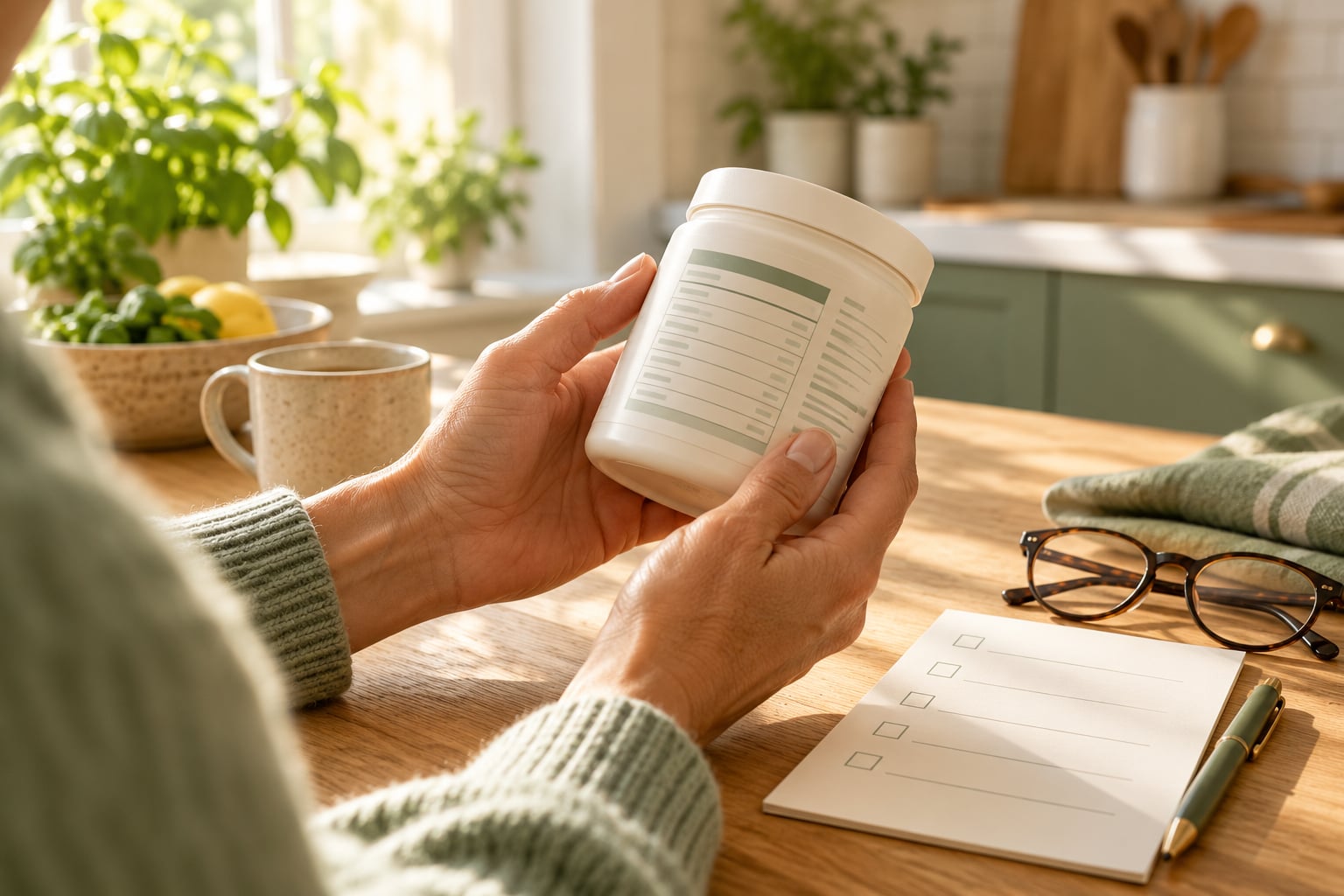
Compare the current label, total cost and pack contents. Check whether an offer includes optional extras that you do not need. A deadline or limited promotion is a sales detail, not a reason to bypass a safety question. You can ask for information, take time to consider it and return later if the product remains appropriate.
No article can confirm that a supplement is necessary for your diet or compatible with your treatment. Use this checklist to improve the conversation, not to diagnose a deficiency or select a treatment. For individual advice, speak with your doctor, pharmacist or another appropriately qualified professional. A careful choice may be to buy, to wait or to decide that no additional product is needed.
“An informed choice leaves room for questions, evidence and a pause.”
Original journal reflection · Wellness with Dave
Sources & further reading
These references support the educational content. Their inclusion does not imply endorsement of this website or its products.